

We still remember the typical Indian college morning: half‑awake lectures, harsh sunlight bouncing off concrete campuses, packed metro stations, and a hurried glance in the mirror before stepping out. Style, in that moment, is never about luxury — it is about readiness. The readiness to face people, heat, expectations, and identity all at once. In India, grooming and accessories are not merely aesthetic decisions; they are social signals. A pair of goggles protects against both glare and judgment, a leather belt quietly defines discipline, and a familiar fragrance becomes recognition before conversation begins.
This article explores how three seemingly simple elements — goggles, leather belts for men, and Wildstone deo — function together as a daily identity system for the modern Indian male. We approach this not as fashion influencers but as observers of behavior, culture, climate, and practicality.The Indian Climate and the Rise of Functional Fashion
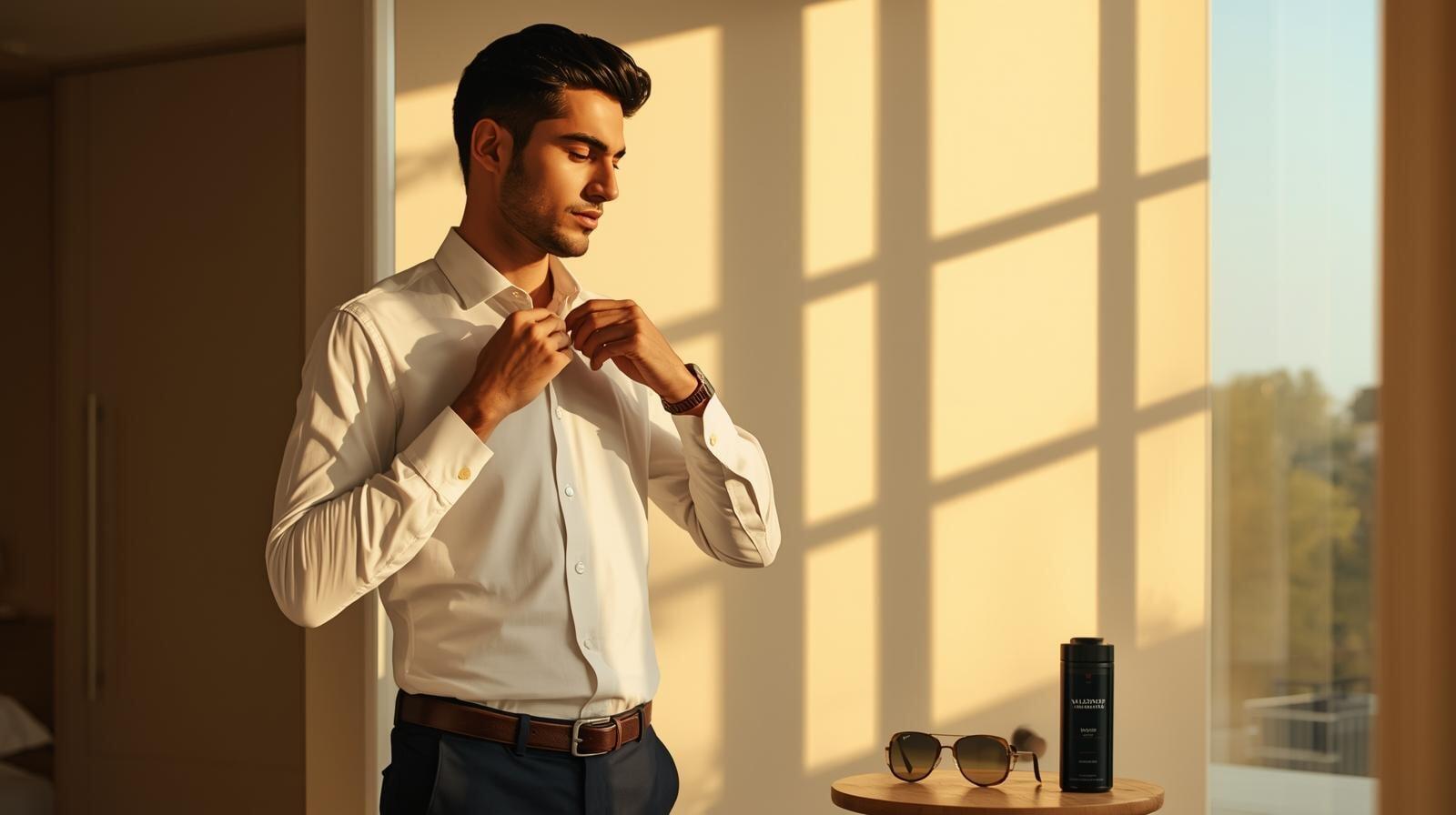
India does not allow decorative dressing alone. Heat, dust, UV exposure, humidity, and pollution shape clothing decisions. Functional accessories dominate because they solve real problems before they express style.
Goggles are not seasonal; they are survival tools in high‑UV zones. Leather belts are not optional; they structure formal culture in workplaces and colleges. Deodorants are not luxury fragrances; they are hygiene necessities in crowded urban mobility environments.
According to the Indian Meteorological Department UV index records, several cities frequently cross high exposure thresholds during the summer months. This reality directly affects eyewear adoption patterns and has made sunglasses one of the most consistent accessory purchases in the country.
External Reference:
https://mausam.imd.gov.in/
The same applies to deodorants. High-humidity regions increase perspiration frequency, making fragrance products a daily essential rather than an occasional grooming product. This environmental determinism explains why practical accessories dominate men’s retail shelves in India more than statement jewelry.
Goggles: Beyond Fashion — A Visual Shield
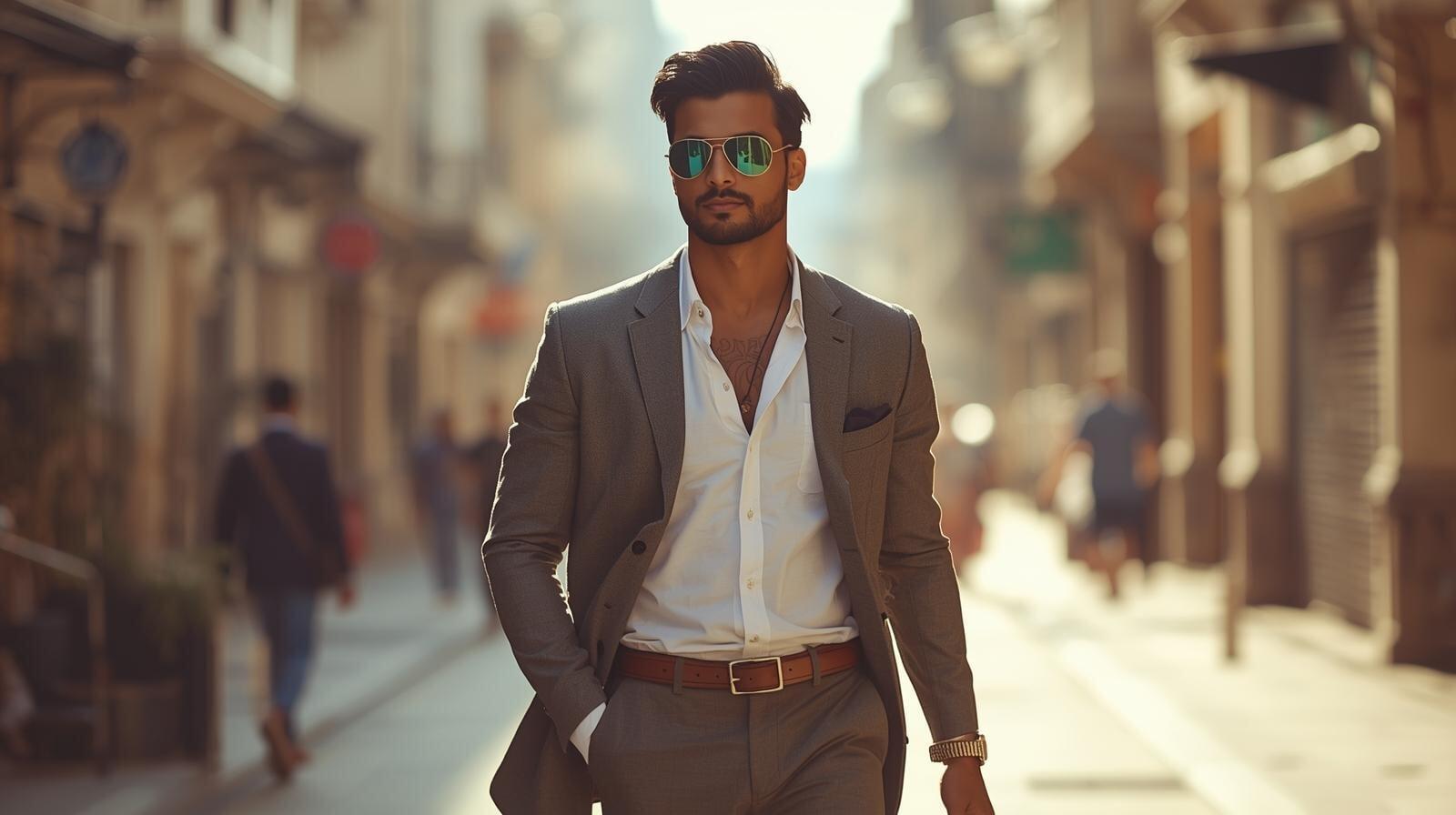
Sunglasses in Western markets often begin as a style and evolve into protection. In India, the order reverses. Protection comes first, style follows.
UV Protection Importance
Unprotected eyes exposed to UV radiation can develop photokeratitis, cataracts, and long‑term retinal damage. Polarized lenses significantly reduce glare from roads and vehicles, especially critical for two‑wheeler riders — a major commuting demographic in India.
External Reference:
https://www.who.int/news-room/fact-sheets/detail/ultraviolet-(uv)-radiation
Urban Mobility and Eye Safety
Motorcyclists and scooter riders face dust, insects, wind pressure, and reflected sunlight. Good goggles reduce eye fatigue and increase concentration while driving. This indirectly reduces accident risk because visual clarity affects reaction time.
Social Identity Through Eyewear
Interestingly, eyewear in India signals personality categories:
Aviators → Confidence & leadership archetype
Wayfarers → Casual urban comfort
Sport wraparounds → Active practicality
Minimal metal frames → Corporate professionalism
Unlike watches or shoes, goggles are face‑level identity markers. They influence first impressions within seconds.
Leather Belts for Men: Structure, Discipline, and Professional Codes
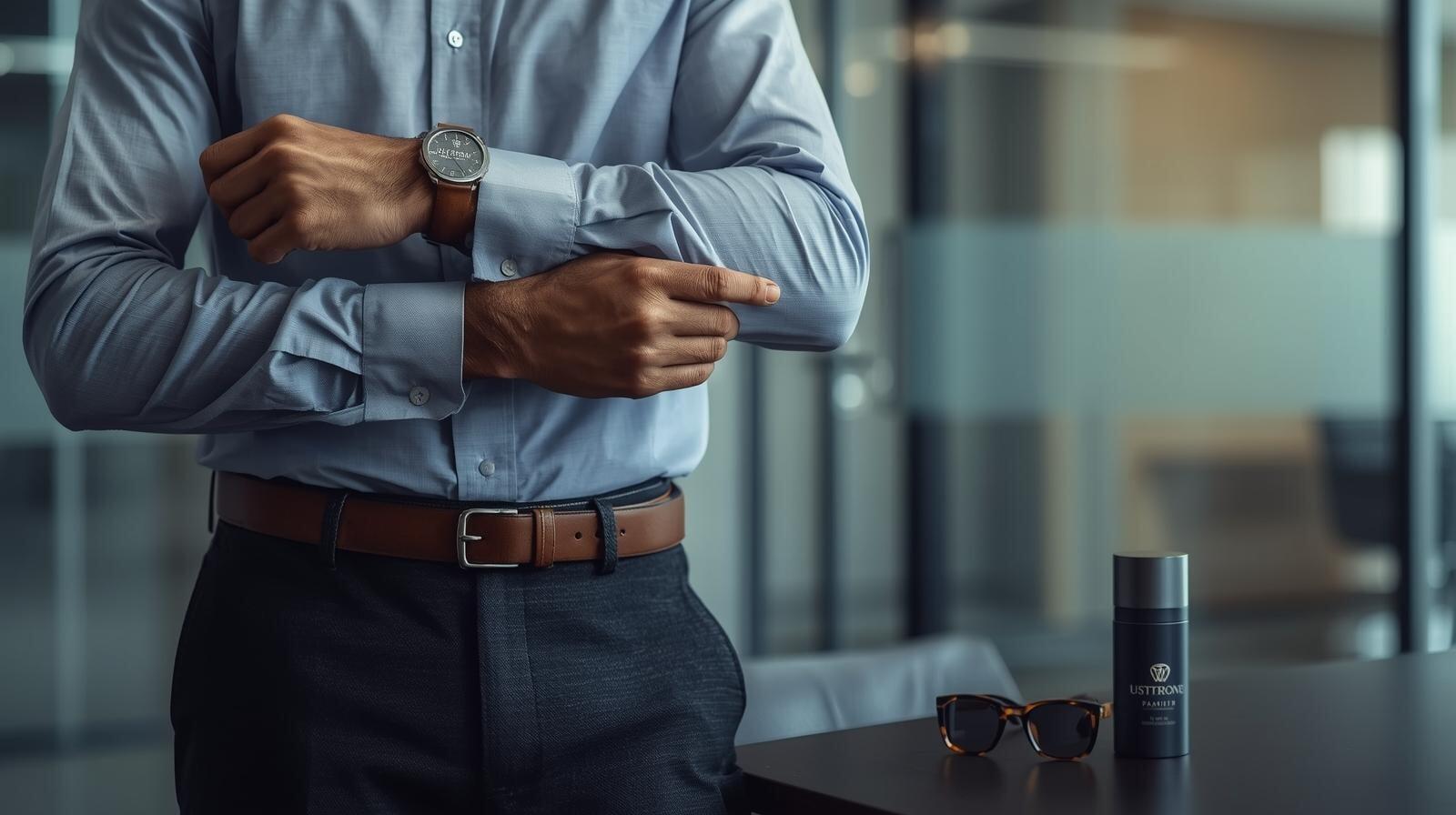
Belts in India operate as compliance markers. In educational institutions, corporate environments, and government offices, tucked shirts with belts represent seriousness. The absence of a belt in formal settings is perceived as incomplete attire.
Why Leather Dominates
Synthetic belts exist, but genuine leather maintains dominance because:
Heat resistance
Shape retention
Formal appearance longevity
Repairability
Cultural association with professionalism
Leather ages rather than degrades. Creases become character rather than damage.
Belt Color Language in India
Black belt → Interviews, corporate meetings, finance sectors
Brown belt → Business casual, creative workplaces
Tan belt → Semi‑casual and college wear
The matching rule between belt and shoes remains one of the most followed dress norms among Indian men across professions.
External Reference (Formal Dress Etiquette Guide):
https://www.forbes.com/sites/forbescoachescouncil/2020/02/24/business-dress-etiquette/
Wildstone Deo: The Psychology of Recognizable Fragrance
Fragrance is memory. Humans associate scent with identity faster than visual recognition in repeated encounters. A consistent deodorant becomes a social signature.
Wildstone has gained popularity in India not purely through advertising but through behavioral adoption — affordability, strong projection, and longevity suitable for humid climates.
Why Deodorant Over Perfume in India
Perfumes evaporate quickly in high heat. Deodorants combine fragrance with sweat control, making them functionally superior for everyday use.
Social Function of Daily Fragrance
In crowded environments — metros, classrooms, offices — personal space reduces. Fragrance becomes part of shared airspace etiquette. Using deodorant is perceived as a social consideration rather than vanity.
External Reference (Human Olfactory Memory Research):
https://www.ncbi.nlm.nih.gov/pmc/articles/PMC6341151/
The Combined Effect: A Complete Everyday Grooming System
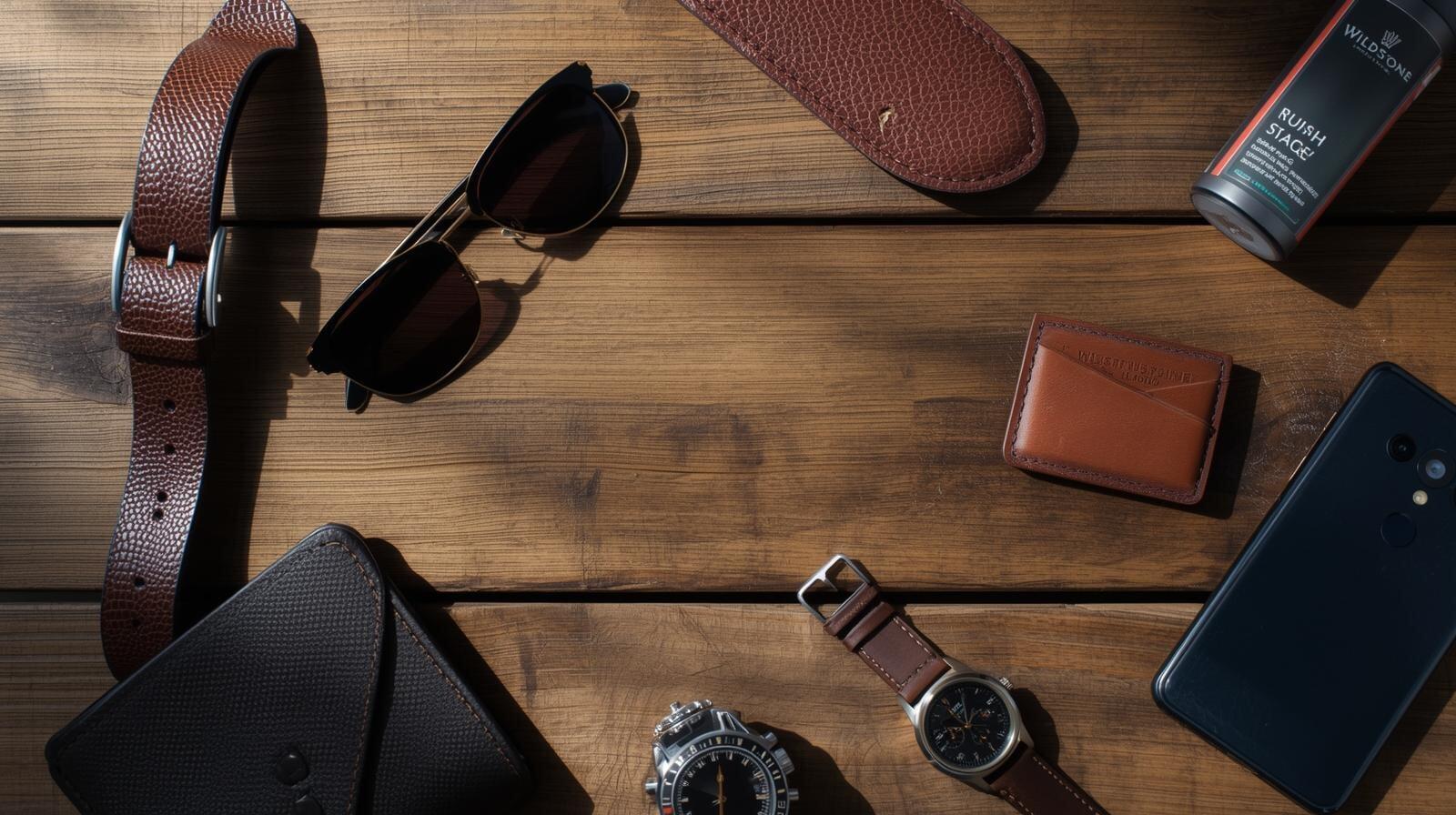
Individually, each element serves a function. Together, they create a predictable personal presence:
Element | Function | Social Interpretation |
Goggles | Protection & focus | Confidence & preparedness |
Leather Belt | Structure | Responsibility & discipline |
Wildstone Deo | Hygiene & identity | Approachability |
Consistency in these signals creates reliability perception — a trait highly valued in professional and social circles in India.
College Culture and First Impressions
College campuses act as social laboratories. Students rapidly categorize peers based on minimal cues. Accessories become communication shortcuts when strangers interact daily.
Observationally:
Students wearing structured outfits are approached for academic tasks.
Well‑groomed individuals are perceived as organized.
Pleasant fragrance increases conversational openness.
These patterns reflect cognitive bias — humans infer personality from visible orderliness.
External Reference (First Impression Psychology):
https://www.apa.org/monitor/2014/02/first-impressions
Workplace Readiness and Career Perception
Recruiters often meet candidates for less than 10 minutes. Non‑verbal signals, therefore, dominate evaluation. While qualifications matter, perceived professionalism influences confidence in capability.
The triad effect works subconsciously:
Eye contact aided by clear vision (goggles removed indoors)
Structured clothing is maintained by a belt
Freshness is maintained by deodorant
Together, they reduce distraction from the conversation itself.
Maintenance and Longevity Practices
Goggles Care
Clean using a microfiber cloth only
Avoid dashboard heat exposure.
Store in a case to prevent micro‑scratches
Leather Belt Care
Condition every 2–3 months
Avoid water exposure
Hang vertically to prevent curved memory.
Deodorant Usage
Apply after a shower on dry skin.
Avoid spraying on clothing fibers repeatedly.
Rotate fragrances occasionally to avoid olfactory fatigue.
Consumer Behavior Trends in India
Recent grooming surveys indicate rising male self‑care awareness in tier‑2 and tier‑3 cities. Practical grooming items outsell luxury accessories due to the value‑utility balance.
External Reference (India Grooming Market Overview):
https://www.ibef.org/industry/personal-care-india
Men increasingly prioritize presentability not for fashion but for social mobility and professional competitiveness.
Conclusion
In India, grooming is not about standing out — it is about fitting in correctly while remaining memorable. Goggles protect clarity, leather belts enforce structure, and Wildstone deo creates familiarity. Together, they construct a repeatable personal identity that travels across college corridors, metro stations, offices, and meetings.
Minimal accessories, when consistent, outperform elaborate styling because reliability builds trust. The modern Indian male, therefore, does not require a wardrobe overhaul; he requires dependable essentials maintained regularly.
Key Takeaways
Accessories in India prioritize function before fashion.
Goggles serve safety and perception simultaneously.
Leather belts act as a professionalism indicator
Daily deodorant builds a recognizable identity.
Consistency creates stronger impressions than variety.
FAQ
Q: Are goggles necessary even in cloudy weather?
A: Yes. UV radiation penetrates clouds, and prolonged exposure still affects eye health.
Q: Why is leather preferred over synthetic belts?
A: Leather maintains shape, lasts longer in heat, and appears more formal in professional settings.
Q: Is deodorant enough without perfume?
A: In hot climates, deodorants are often more practical because they combine sweat control with fragrance.
Q: Should belt and shoe color always match?
A: For formal attire, matching colors significantly improves perceived professionalism.
Q: How often should grooming accessories be replaced?
A: Goggles: 2–3 years, Belt: 3–5 years with care, Deo: replace monthly depending on usage.
